Case Study — 06/06
TGL — Freight Operations Platform
Designing a structured quoting experience for freight teams working across clients, routes, cargo and charges.
- Role
- Product Designer
- Timeline
- 2 months
- Platform
- Web Platform
- Status
- Live
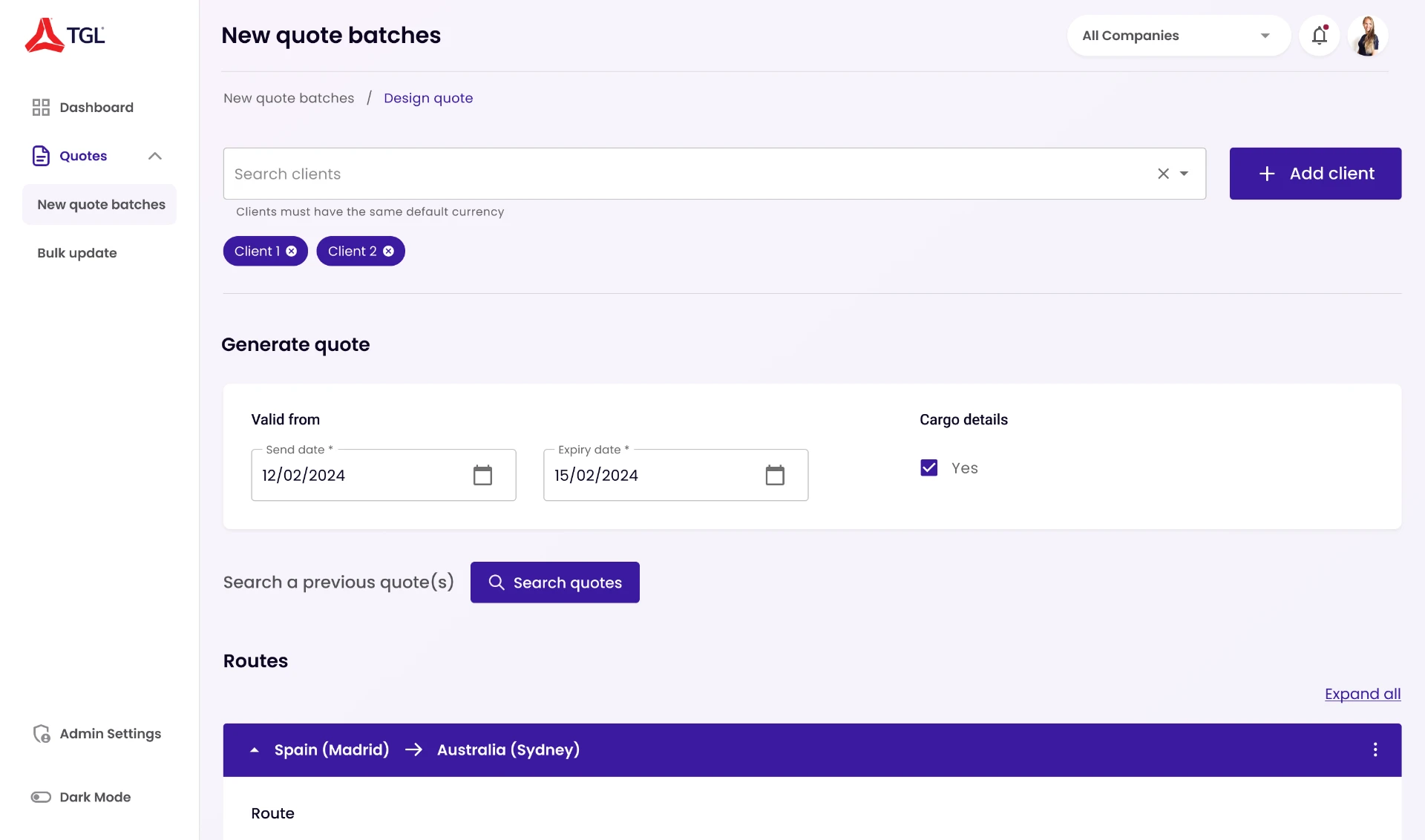
PROJECT OVERVIEW
Overview
Think Global Logistics needed an internal platform to simplify how freight quotes were created, reviewed and managed by its operations team. I designed a structured quoting workflow covering clients, previous quotes, routes, cargo, charges and final review, turning a highly detailed operational process into a clearer, more manageable experience. Working closely with Product, Engineering and Operations, I designed within the constraints of the MUI component library, balancing usability, consistency and technical feasibility throughout the platform.
- SCOPE
- Freight quoting, client management, routes and cargo, charges, quote review and bulk operations.
- RESPONSIBILITIES
- UX and UI design, workflow mapping, wireframing, prototyping, interaction design and designing within the MUI component system.
- TEAM
- Product, Engineers and Operations stakeholders.
Challenges & Solutions
Freight quoting looks straightforward from the outside, but behind every quote sits a dense network of routes, cargo, charges, currencies and operational dependencies. I focused on three areas where that complexity created the most friction for the operations teams managing quotes every day.
01 / 03
A single quote could contain dozens of moving parts.
Routes, cargo types, weights, containers, pickup and delivery details, charges, currencies and validity periods all needed to live within the same quote. As complexity increased, it became harder to understand how each piece of information related to the rest.
Structured quoting workflow
I broke the process into clear stages, from client and route setup through cargo, charges and final review, helping teams navigate complex quotes without exposing everything at once.
02 / 03
Dense information needed to stay understandable.
Cargo and charges contained large amounts of operational detail, while users still needed to understand the relationship between routes, costs and shipment information at a glance.
Clear hierarchy within MUI constraints
Working within the MUI component system, I used consistent patterns, grouping and progressive disclosure to organise dense information while keeping the experience familiar and technically realistic to build.
03 / 03
Repetitive work slowed operations down.
Teams often worked with similar clients, routes, cargo details and charges across multiple quotes, creating unnecessary manual work when information had to be entered or updated repeatedly.
Reuse and bulk actions
Previous quote data could be reused, while bulk update patterns allowed teams to make changes across multiple items more efficiently instead of editing them one by one.
Designing with the people closest to the work
Before designing screens, I worked closely with Product, Engineering and TGL’s Operations team to understand how freight quotes were actually created and managed day to day.
As the people who would use the platform every day, Operations helped us identify the information, decisions and pain points that mattered at each stage. Together, we mapped the key workflows and shaped the platform around real operational needs and technical constraints.
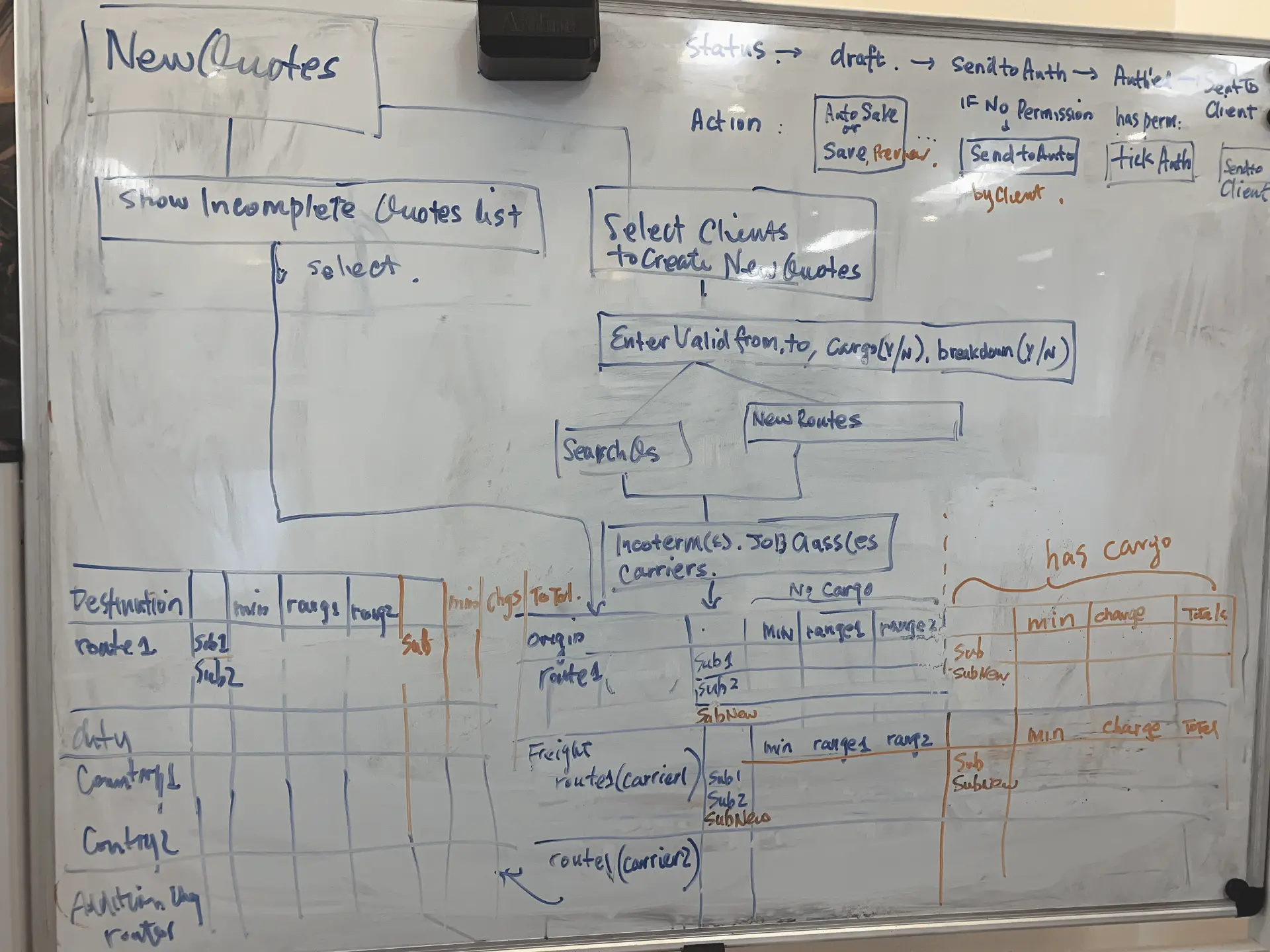
Workflow mapping
Mapped the end-to-end quoting process with Product, Engineering and Operations to understand key steps, dependencies and pain points.
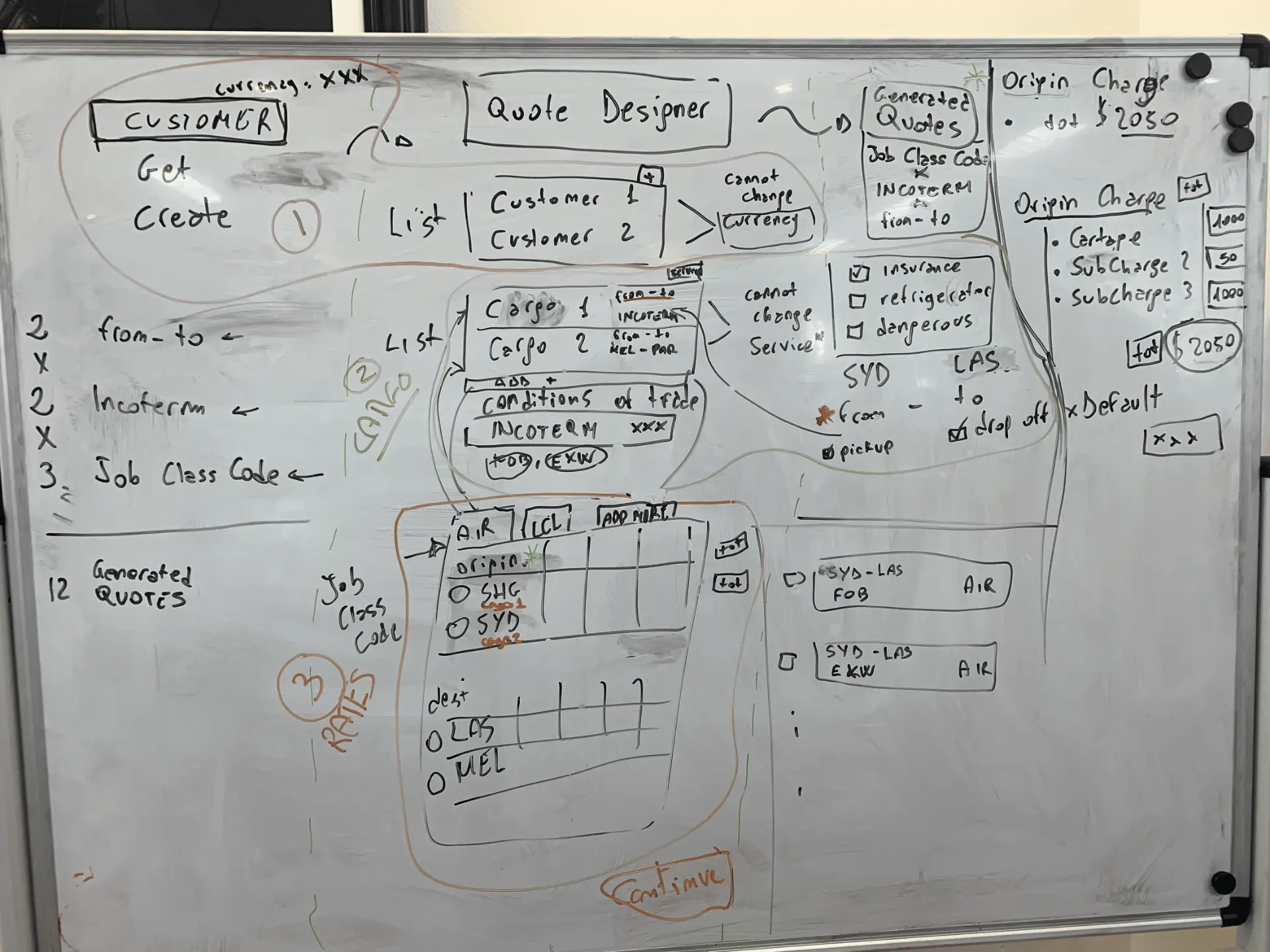
Quote structure
Explored how clients, routes, cargo and charges could fit together within a single quoting workflow.
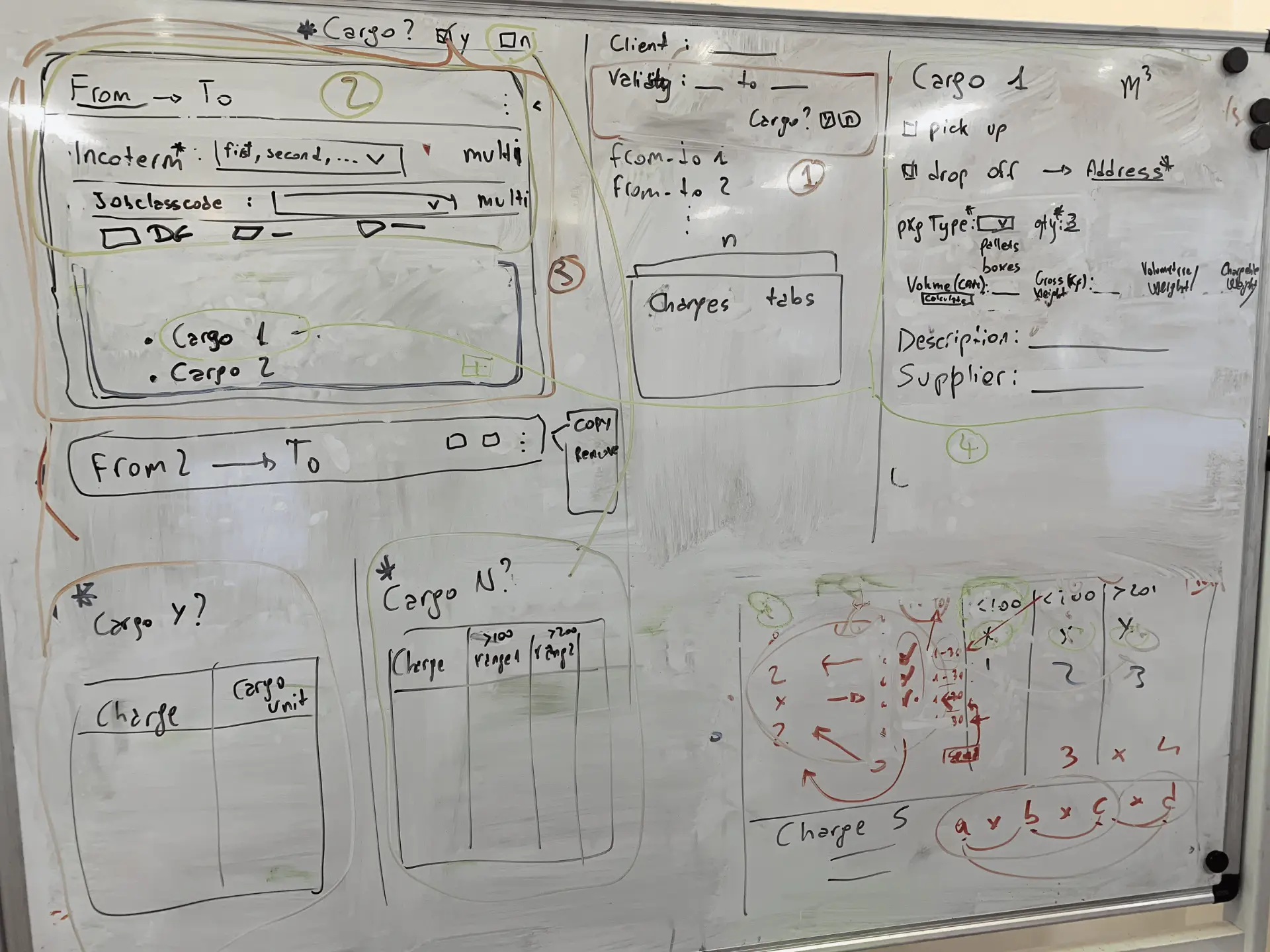
Cargo logic
Worked through cargo conditions, pricing rules and data relationships to understand the complexity behind each quote.
Making dense information easier to manage
Once the workflow was understood, the challenge became translating that operational complexity into an interface teams could navigate confidently.
Routes, cargo and charges could quickly become information-heavy, particularly when a quote contained multiple combinations. I used clear grouping, repeatable interaction patterns and progressive disclosure to keep related information together while allowing users to focus on one part of the quote at a time.
Working within the MUI component system also meant balancing usability and consistency with what could realistically be implemented by engineering.
ROUTES & CARGO
Keeping routes, shipment details and cargo information connected within the same quote.
CHARGES
Organising multiple cost types, currencies and conditions without losing context.
Reducing repetitive work
Operations teams often worked with similar clients, routes, cargo details and charges across multiple quotes. Re-entering the same information or updating items one by one added unnecessary effort to an already detailed workflow.
I looked for opportunities to make frequent tasks faster, allowing existing quote information to be reused and larger sets of data to be updated more efficiently.
REUSING EXISTING WORK
Starting from what already exists
Not every quote needed to start from scratch. Previous quotes gave teams a way to find existing work and reuse relevant information when preparing similar requests.
This reduced repeated input while keeping the new quote connected to a familiar structure.
Designed for speed, not just clarity.
BULK ACTIONS
Updating more without repeating the same task
For larger or more complex quotes, making the same change repeatedly could quickly become inefficient.
Bulk update patterns allowed teams to apply changes across multiple items together, reducing repetitive actions while keeping users in control of what was being updated.
From operational complexity to a client-ready quote
After building the quote across routes, cargo and charges, teams needed a clear final checkpoint before anything was sent to the customer.
The final quote view brought the information together in context, making it easier to review details, conditions and costs before moving into the final send step.
FINAL REVIEW
Reviewing the whole quote in context
The final quote view brought routes, cargo, charges and conditions together in one place, giving Operations a clearer way to check the full quote before it left the internal workflow.
Complex inside. Clear before it leaves the team.
CLIENT HANDOFF
Preparing the quote to send
Once the quote had been reviewed, the final step gave the team a clear handoff point for preparing and sending it to the client.
Less friction in complex day-to-day operations
The new platform gave freight teams a clearer way to create and manage complex quotes, bringing routes, cargo, charges and client information into one structured workflow.
Faster Quote Creation
Previous Quote and Bulk Update reduced repetitive work by helping teams reuse existing information and make changes across complex quotes more efficiently.
One Workspace
Key quoting information could be reviewed and managed from one interface instead of being handled across fragmented workflows.
Designed for Daily Use
Clear hierarchy, reusable patterns and structured data-dense layouts made large amounts of operational information easier to scan, compare and update throughout the day.
Before
Creating and updating complex quotes required repetitive actions across large amounts of freight information.
After
Teams could reuse previous quotes, update information in bulk and manage the full quoting workflow through one structured interface.